

Understanding the New SAFE Framework: Enhancing Food Safety for a Safer Dining Experience
In the ever-evolving food industry, food safety remains a top priority for both establishments and consumers. To ensure higher food safety standards, the Singapore Food Agency (SFA) has introduced the Safety Assurance for Food Establishments (SAFE) framework. This new grading and licensing system, effective from January 2026, shifts the focus from a single inspection snapshot to long-term, consistent food safety performance. Here’s everything you need to know about the SAFE framework, how the new grading system works, and how it will shape the food service landscape in Singapore
What is the SAFE Framework?
The SAFE framework is a new food safety grading and licensing system introduced by the Singapore Food Agency (SFA). This framework evaluates establishments based on their long-term performance in food safety, replacing the old grading system, which was based on a single inspection. The SAFE framework considers an establishment’s history of food safety practices, rewarding those with a consistent track record of maintaining food safety standards.
Who Should Care About the SAFE Framework?
Food establishments in Singapore, especially those in categories 1 and 2 (large kitchens, caterers, smaller restaurants, takeaway stalls, etc.), need to be aware of and prepared for the SAFE framework. It is especially critical for business owners, food safety officers, managers, and anyone overseeing food handling and operations in establishments that prepare food for sale.
Where Can Consumers Access Food Safety Grades?
Consumers can access food safety grades easily by scanning the QR code found on an establishment’s license. These grades will also be available online, allowing consumers to make informed decisions based on an establishment’s food safety record. This transparent grading system provides greater consumer confidence and encourages businesses to maintain high food safety standards.
When Does the SAFE Framework Come into Effect?
The SAFE framework will officially come into effect on 19 January 2026. From this date, food establishments will begin receiving grades based on their long-term track record in food safety. The grading system will be part of ongoing licensing, inspections, and businesses will be required to adapt their food safety protocols accordingly. The implementation of the SAFE framework will occur in two phases:
- Phase 1 (starting January 2026): This phase focuses on the initial rollout of the grading system and the implementation of key food safety standards. It will involve a gradual transition for establishments to align with the SAFE framework.
- Phase 2 (January 2027 onwards): By this phase, all food establishments will be fully integrated into the grading system, and continuous evaluation of food safety performance will be fully enforced.
How Will the SAFE Framework Impact Your Business?
The SAFE framework introduces a new grading system that evaluates food establishments based on their track record of food safety and whether they have a Food Safety Management System (FSMS) in place. This grading system will impact how businesses are evaluated and how consumers perceive their commitment to food safety. Not sure if your FSMS meets SAFE requirements?
The Grading System:
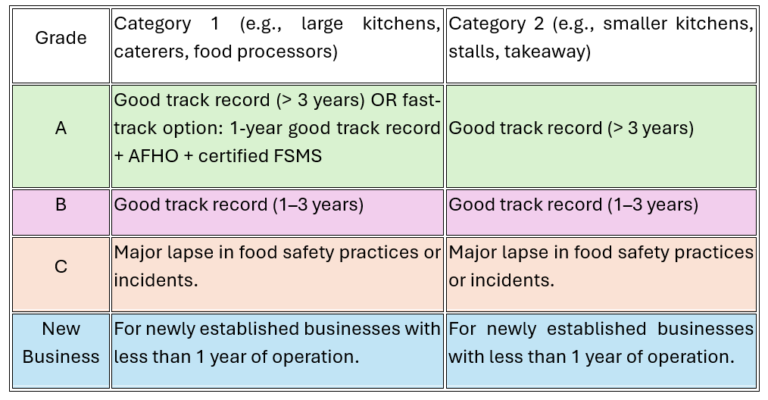
Establishments will be graded from A (highest) to C (lowest) based on their performance in food safety, with special provisions for new businesses that have been in operation for less than a year. Unsure how to qualify for Grade A?
What You Must Do to Protect Your Grade (From 2026)
To prepare your establishment for the upcoming changes, follow these steps:
- Grade A: To achieve this grade, your business must have a strong food safety track record (3+ years) or be committed to maintaining high standards with a Food Safety Management System (FSMS) and an AFHO (for larger establishments).
- Grade B: A good track record (1-3 years) of food safety performance will place your business in this category.
- Grade C: If your establishment has major lapses in food safety, your business may be downgraded to this category.
- New Business: If your business is new (less than 1 year of operation), you will initially be classified under the new business category, and your grade will improve over time as you build a food safety track record.
This grading system will be publicly available for consumers, ensuring that businesses with a history of safe practices are recognized and rewarded.
Why Does the SAFE Framework Matter?
The SAFE framework is a significant improvement in how food safety is managed and communicated to both businesses and consumers. By focusing on long-term performance rather than one-time inspections, the SAFE framework ensures that food establishments continuously uphold food safety standards. This transparent system promotes consumer trust, encourages accountability and rewards consistent food safety efforts. It’s essential for establishments to adopt a proactive approach to food safety and maintain safety practices year-round.
How Assure Safety Helps Your Business Succeed Under the SAFE Framework
- Training Courses (WSQ & Food Safety)
Assure Safety provides SFA-recognised and WSQ training courses to help businesses meet regulatory requirements and maintain high food safety standards.
We offer Food Safety / Food Hygiene Courses (Level 1) for food handlers, a mandatory requirement for staff working in SFA-licensed food establishments. These courses equip employees with essential knowledge on safe food preparation and hygiene practices.
For higher-risk establishments such as canteens and cold stores, SFA requires the appointment of certified Food Hygiene Officers (FHOs). Assure Safety supports businesses by offering the WSQ Food Safety Course (FSC) Level 3, enabling supervisors such as chefs, managers, and operations leads to become certified FHOs.
FHOs play a critical role in implementing and monitoring food safety systems, conducting routine inspections and guiding food handlers to comply with hygiene standards. By strengthening on-site food safety oversight, businesses can reduce the risk of foodborne incidents, avoid regulatory penalties and protect their brand reputation.
With available funding support such as SkillsFuture Credit, Assure Safety helps businesses train their teams effectively while managing costs.
- Consultancy Services
Assure Safety offers consultancy support in workplace safety and specialised food safety areas like Food Hygiene Officers.
- Our WSH Consultancy includes coaching and guidance for roles such as Food Hygiene Officer (FHO) professionals responsible for ensuring food safety practices within establishments.
- Food Safety Management System (FSMS) Development & Implementation
For Category 1 establishments, a minimum non-certified FSMS, such as SS 583, is required. Assure Safety can guide you through the implementation of these frameworks, ensuring a solid foundation for food safety compliance.
- ISO & Management System Consultancy
Assure Safety also provides ISO certification consultancy, including ISO standards highly relevant to food safety and organisational systems.
- We provide ISO 22000 consultancy, which is a Food Safety Management System standard that helps organisations control food safety hazards and improve performance.
Get your food establishment SAFE framework ready today! Implement an FSMS, monitor your food safety and appoint an FHO if needed. Need help? Contact us now for expert support to ensure you’re compliant and set for success in 2026.